
Tourist Attractions
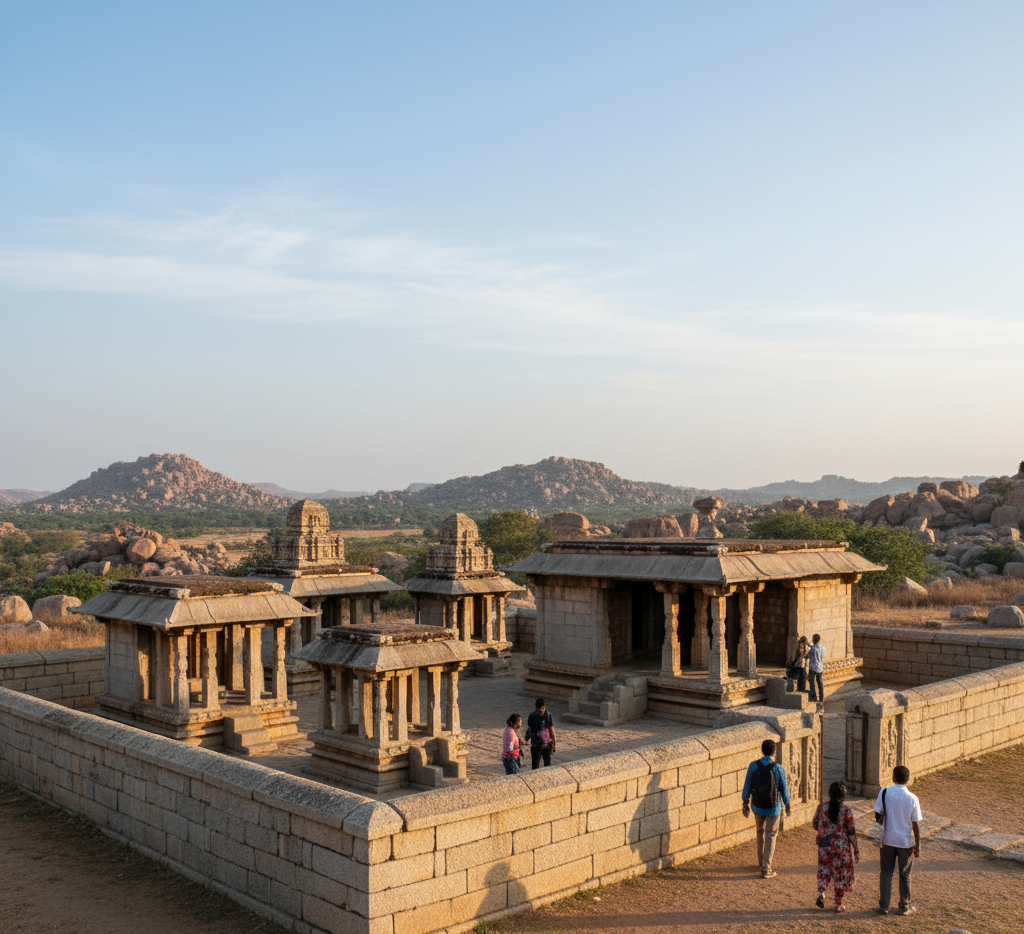
Sri Krishnadevaraya's Tomb
Sri Krishnadevaraya’s Tomb is a significant historical site associated with one of the greatest rulers of the Vijayanagara Empire. Emperor Krishnadevaraya is remembered for his exceptional leadership, military strength, and patronage of art, literature, and temple architecture. The tomb stands as a symbol of the empire’s golden age and its enduring legacy.
Located within the broader Vijayanagara heritage region, the site attracts history enthusiasts and cultural tourists. Though simple in structure, the tomb carries immense historical value and reminds visitors of the emperor’s contributions to South Indian history. A visit to this site adds depth and context to the exploration of heritage places near Gangavati.
Hampi
Hampi is one of India’s most celebrated heritage and spiritual destinations, located close to Gangavati and recognized globally as a UNESCO World Heritage Site. Once the magnificent capital of the Vijayanagara Empire, Hampi flourished as a center of power, art, culture, and religion between the 14th and 16th centuries. Today, the landscape is dotted with an extraordinary collection of ancient temples, royal enclosures, market streets, stone pavilions, and monumental ruins spread across a dramatic terrain of massive boulders and rocky hills. Every structure reflects the architectural brilliance, artistic mastery, and cultural prosperity of medieval South India.
For pilgrims, historians, and travelers alike, Hampi offers a unique blend of spiritual devotion and historical exploration. Sacred temples such as Virupaksha continue to resonate with daily worship, while river ghats along the Tungabhadra River provide a serene atmosphere for reflection and rituals. The intricate carvings, ancient inscriptions, and timeless ruins narrate stories of a glorious past, making Hampi a deeply enriching destination.
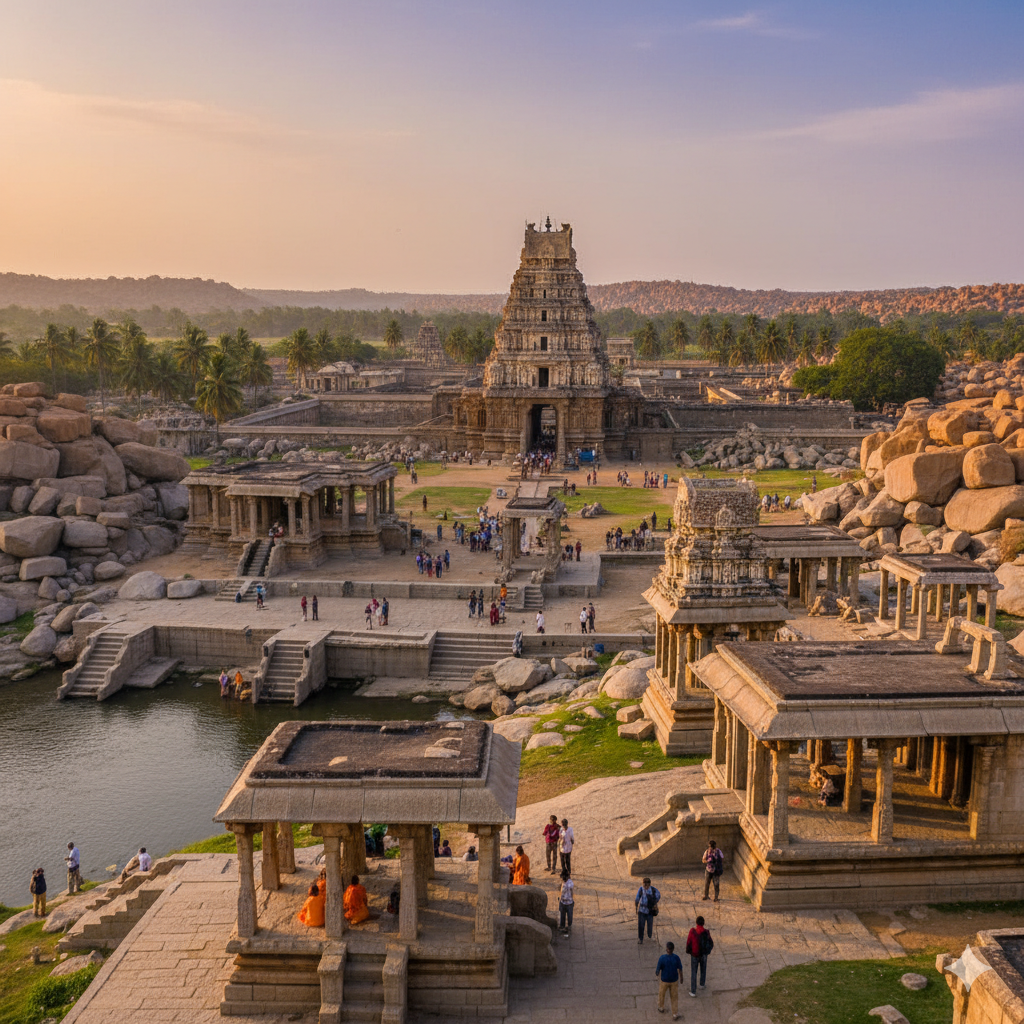
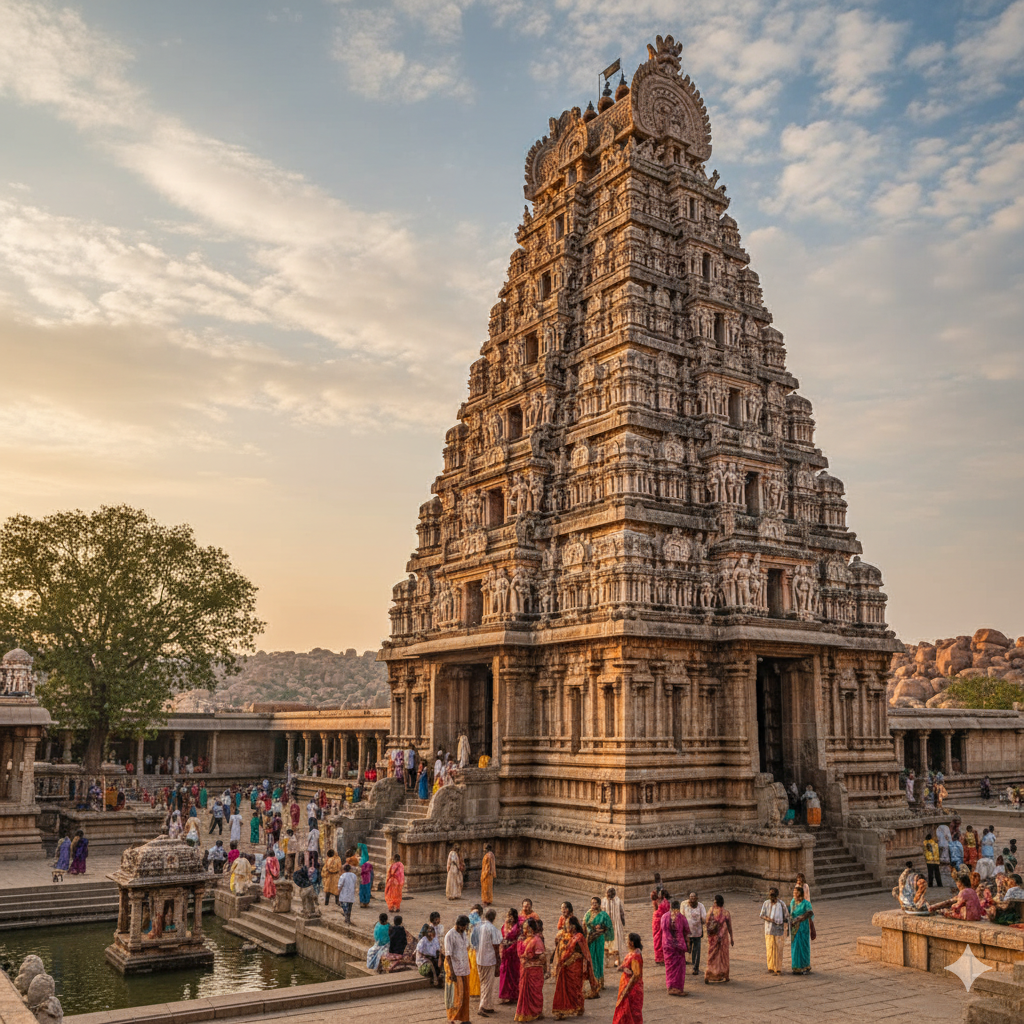
Virupaksha Temple
Virupaksha Temple is one of the oldest and continuously functioning temples in India, dedicated to Lord Shiva, and stands as the spiritual heart of Hampi. With origins dating back several centuries before the Vijayanagara Empire, the temple gained prominence during the empire’s golden age and remains an active center of worship even today. Its towering gopuram, richly decorated with sculptures and carvings, rises majestically above the surrounding ruins and serves as a prominent landmark visible from a distance. The temple complex reflects the architectural excellence and deep religious devotion of medieval South India.
Daily rituals, special poojas, and grand annual festivals draw thousands of devotees and pilgrims from across Karnataka and beyond. The temple comes alive during festive occasions with processions, traditional music, and vibrant celebrations that fill the streets around it. Set against the historic backdrop of Hampi and close to the banks of the Tungabhadra River, Virupaksha Temple offers a deeply spiritual experience combined with timeless architectural beauty.
Vijaya Vittala Temple
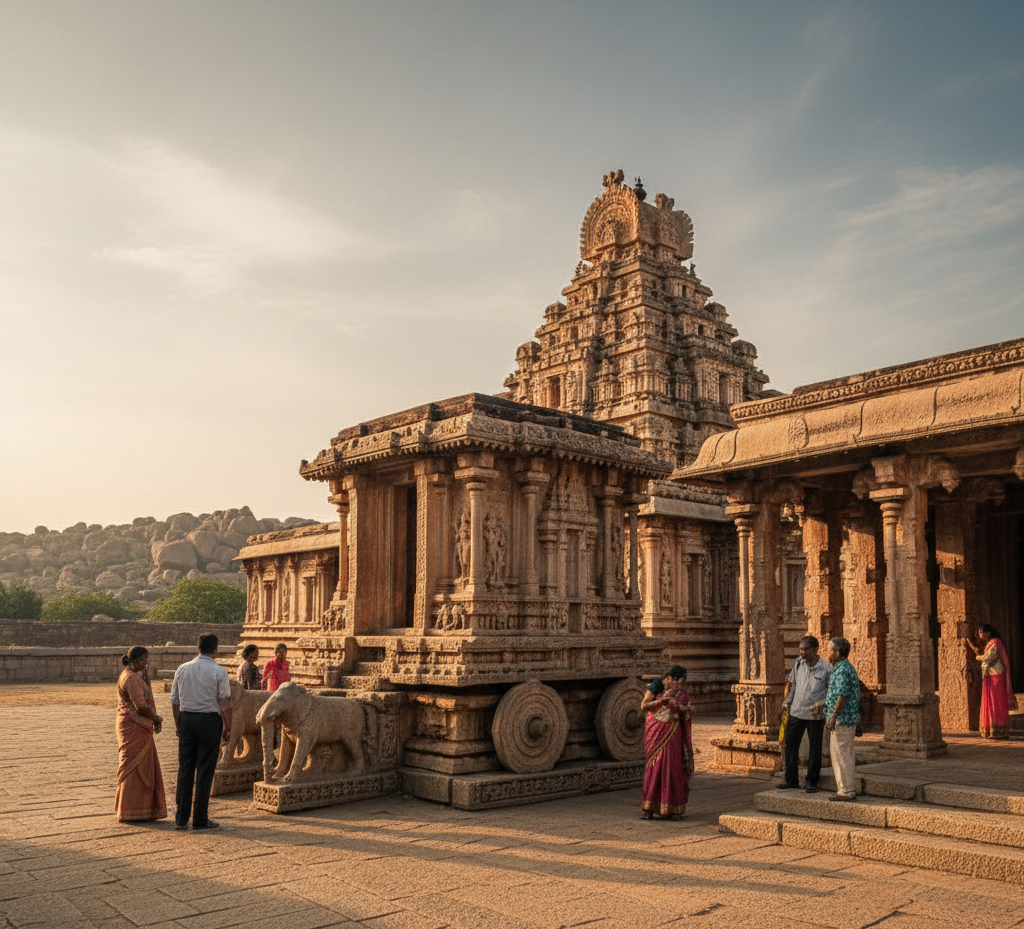
The Vijaya Vittala Temple stands as a magnificent masterpiece of Vijayanagara architecture and is among the most iconic monuments in Hampi. Constructed during the height of the Vijayanagara Empire, the temple complex is celebrated for its exceptional artistic and engineering brilliance. Its most famous feature, the exquisitely carved stone chariot, has become a global symbol of Hampi’s heritage. Equally remarkable are the musical pillars of the Ranga Mantapa, which produce distinct melodic sounds when gently tapped, showcasing the advanced acoustic knowledge and craftsmanship of the era.
Although the temple is no longer used for regular worship, it continues to hold immense spiritual, historical, and cultural significance. The vast courtyards, intricately carved pillars, and grand mandapas offer visitors a powerful glimpse into the architectural innovation and devotion that defined medieval Karnataka. For travelers visiting from Gangavati and nearby regions, Vijaya Vittala Temple is an essential stop on the heritage circuit, representing the grandeur, creativity, and timeless legacy of Karnataka’s temple architecture.
Anjanadri Hill
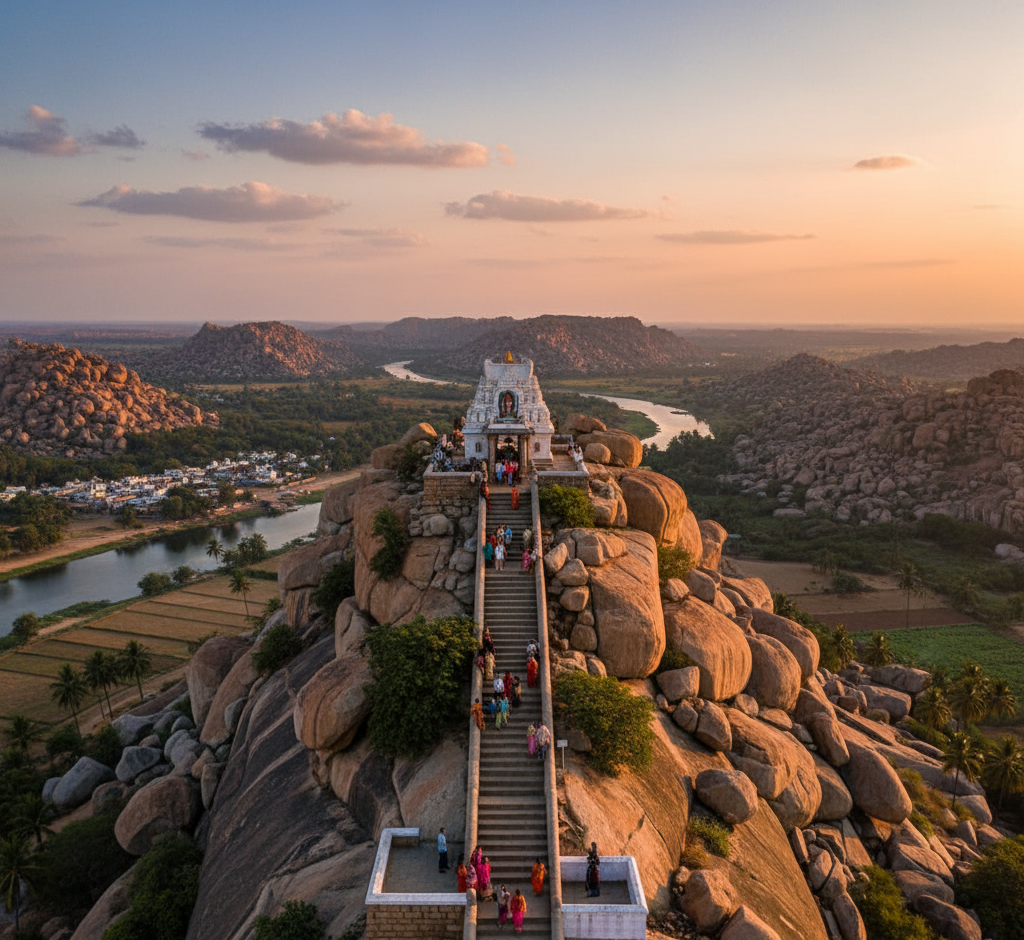
Anjanadri Hill is widely believed to be the birthplace of Lord Hanuman, making it one of the most revered pilgrimage sites near Gangavati. Deeply rooted in the Ramayana, the hill holds immense mythological and spiritual significance for devotees of Lord Hanuman. Situated along the banks of the Tungabhadra River, Anjanadri Hill is crowned with a temple dedicated to the deity, attracting pilgrims who undertake the climb to seek blessings, strength, courage, and spiritual protection. The journey to the hilltop itself is considered an act of devotion, filled with faith and reverence.
Beyond its religious importance, Anjanadri Hill is celebrated for its breathtaking natural beauty and serene surroundings. From the summit, visitors are rewarded with panoramic views of the Tungabhadra River, vast stretches of rocky hills, lush greenery, and nearby villages. The calm atmosphere, gentle river breeze, and scenic landscapes make it a perfect destination for meditation, photography, and quiet reflection. For travelers exploring the Gangavati region, Anjanadri Hill offers a rare combination of spiritual depth and natural charm, appealing to both devotees and nature lovers alike.
Navabrindavana
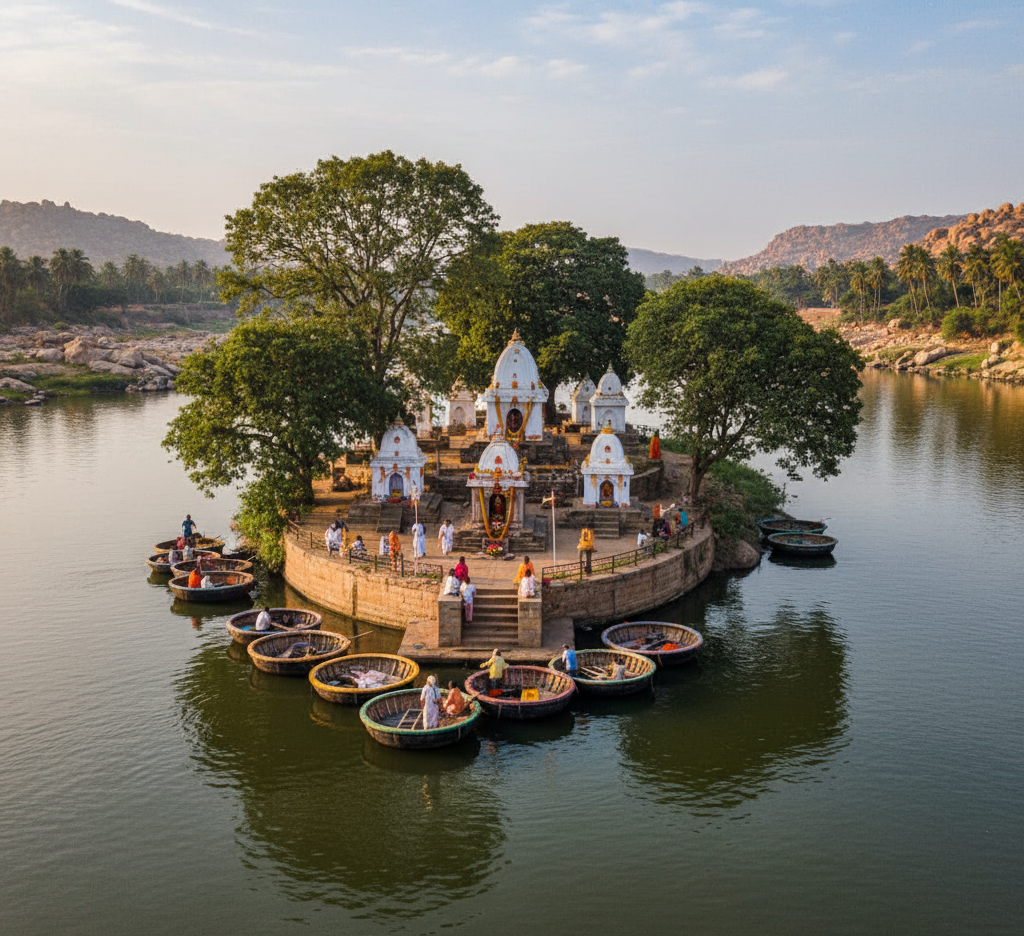
Navabrindavana is a sacred island situated in the middle of the Tungabhadra River, revered as one of the most important pilgrimage sites of the Madhva tradition. The island is home to the samadhis (tombs) of nine highly respected saints, including eminent scholars and spiritual leaders who propagated the Dvaita philosophy. Owing to its deep spiritual significance, Navabrindavana is considered extremely auspicious, drawing devotees who seek blessings, spiritual clarity, and inner peace. Reaching the island by traditional coracle or boat adds a sense of devotion and serenity to the pilgrimage experience.
Surrounded by flowing river waters and a calm natural setting, Navabrindavana offers an atmosphere ideal for meditation, prayer, and spiritual reflection. The quiet surroundings, sacred chants, and timeless presence of the samadhis create a deeply uplifting experience for visitors. Devotees from Gangavati and nearby regions frequently include Navabrindavana in their pilgrimage journeys, especially followers of the Dvaita philosophy and those seeking a spiritually enriching retreat. The island stands as a symbol of faith, scholarship, and enduring spiritual legacy in the Gangavati–Hampi region.
Anegundi
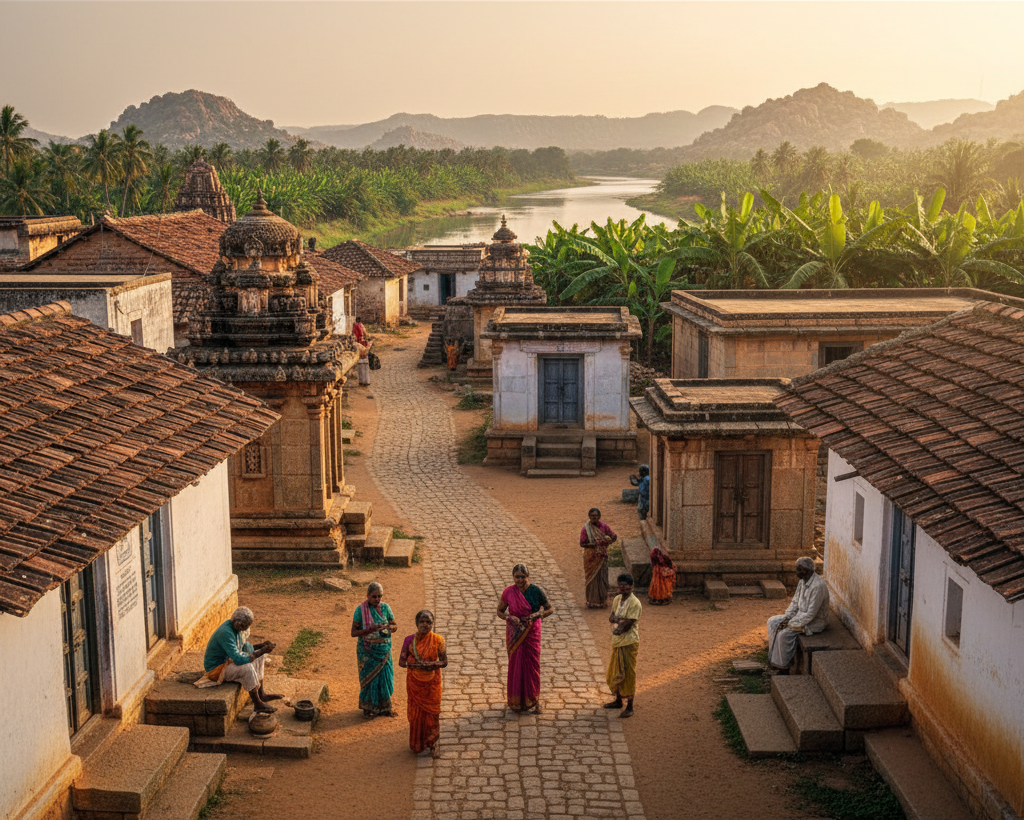
Anegundi is a historic village located on the northern bank of the Tungabhadra River and is considered one of the oldest continuously inhabited settlements in India. It is widely regarded as the cradle of the Vijayanagara Empire, with a history that predates the grand ruins of Hampi. The village is dotted with ancient temples, traditional houses, and narrow lanes that preserve the charm of old Karnataka.
Today, Anegundi offers visitors a peaceful cultural experience rooted in history and rural life. Heritage walks, traditional art forms, and local festivals provide insight into the region’s past and living traditions. For travelers staying in or around Gangavati, Anegundi serves as a perfect blend of heritage, spirituality, and authentic village culture.
Sanapur Lake
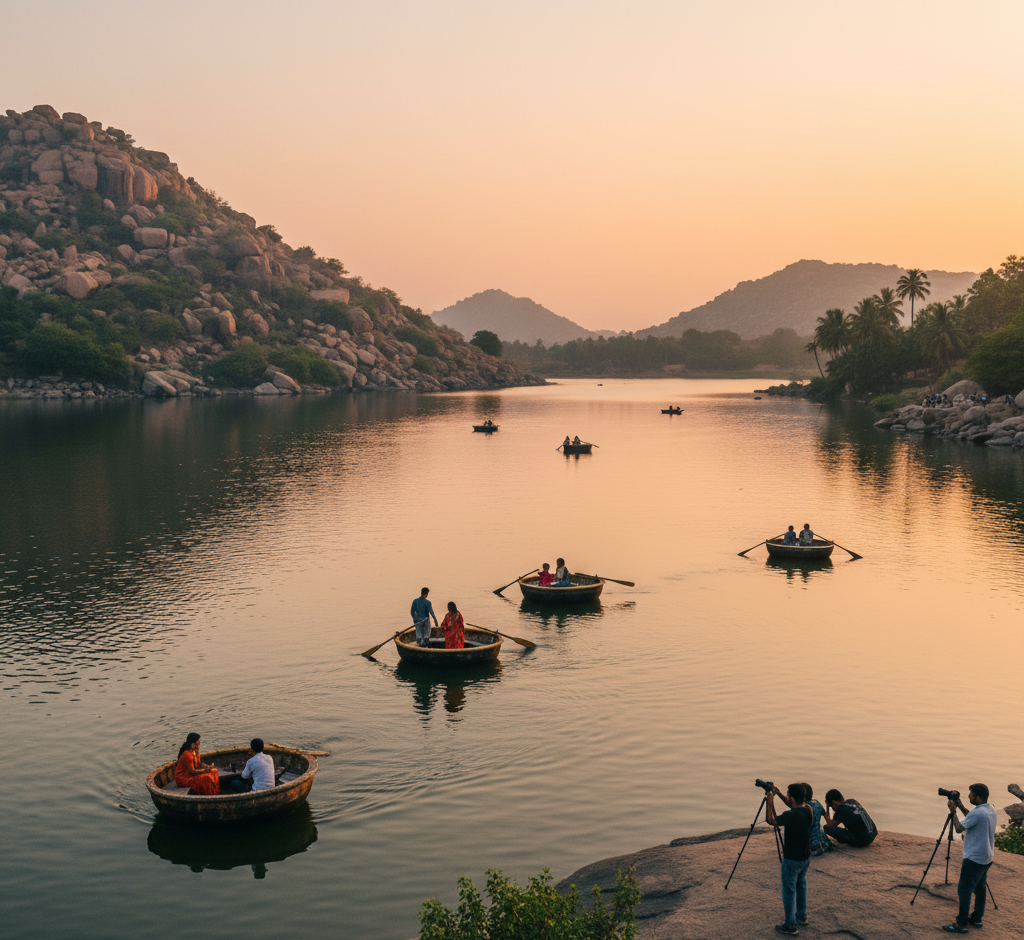
Sanapur Lake is a serene and picturesque water body located close to Hampi and easily accessible from Gangavati, offering visitors a refreshing escape into nature. Nestled amid rugged rocky hills and wide-open landscapes, the lake provides a calm and peaceful setting away from the busier heritage sites. The still waters reflect the surrounding boulders and skies, creating a visually stunning environment that appeals to photographers and nature enthusiasts alike.
The lake is especially popular for coracle rides, which allow visitors to gently glide across the water and enjoy the scenic surroundings from a unique perspective. Early mornings and sunset hours are the best times to visit, as the soft light enhances the beauty of the lake and its surroundings. Sanapur Lake attracts couples, families, and travelers seeking quiet leisure and relaxation, making it an ideal stop while exploring the heritage and natural attractions around the Gangavati region.
Tungabhadra River
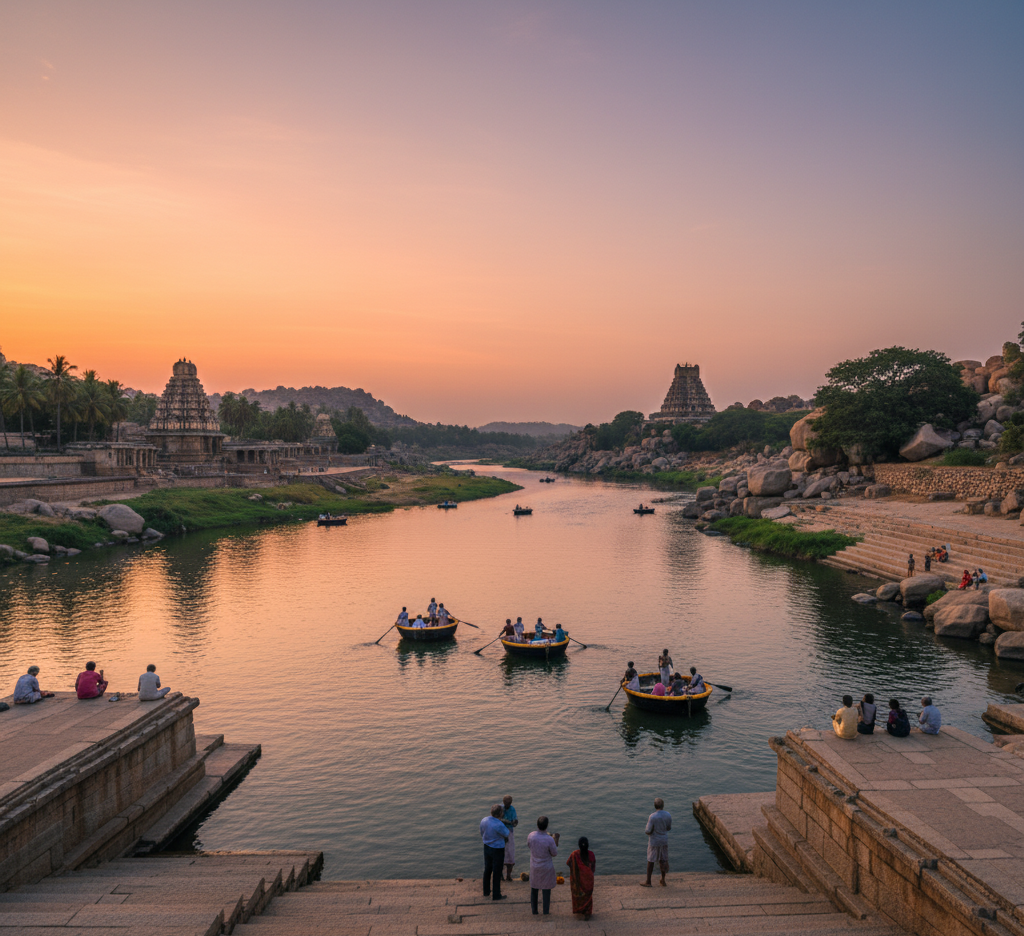
The Tungabhadra River holds immense historical, spiritual, and cultural significance in Karnataka and has played a vital role in shaping the civilization of the Gangavati–Hampi region. Flowing close to Gangavati and through the historic ruins of Hampi, the river has served as a lifeline for agriculture, settlements, and temple communities for centuries. Its waters have supported fertile farmlands through canal irrigation and sustained generations of farmers, making it central to the region’s economy and way of life. Numerous temples, sacred ghats, and pilgrimage islands along its banks highlight its deep religious importance.
Beyond its spiritual and historical value, the Tungabhadra River greatly enhances the natural beauty of the region. The calm riverbanks, rocky landscapes, and flowing waters create a serene environment ideal for quiet reflection and relaxation. Visitors often gather along the river during sunrise and sunset to experience its peaceful atmosphere and scenic charm.