
Kinnal Art
About Kinnal Art
Kinnal Art is a traditional wooden craft form that originated in Kinnal, Karnataka. This unique art is best known for its colorful wooden toys, dolls, and decorative items that showcase a glossy lacquer finish and intricate hand-painted details. Deeply rooted in the cultural fabric of North Karnataka, Kinnal art reflects the simplicity, creativity, and storytelling traditions of rural life.
Each Kinnal art piece is handcrafted with patience and precision, making every product unique. The craft stands as a living heritage, representing the artistic skills passed down through generations of local artisans. Today, Kinnal art is admired not only as a children’s toy tradition but also as a cultural symbol and decorative folk art.

Origin & Heritage
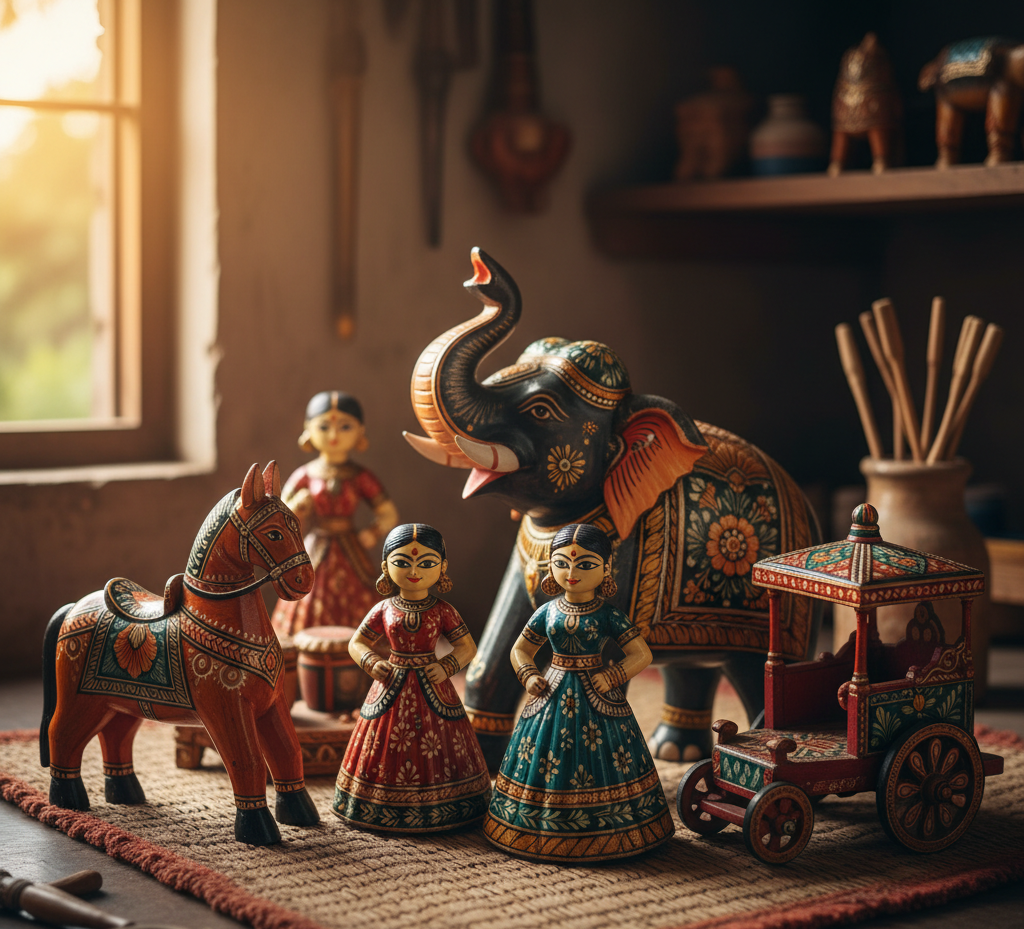
The origins of Kinnal art date back several centuries when artisans in the Koppal region began creating wooden toys inspired by daily village life, folklore, and religious themes. Historically, these toys were used in households, temple rituals, festivals, and village fairs. Kings and local patrons supported the craft, allowing it to flourish as a respected form of folk expression.
Over time, Kinnal art became an integral part of Karnataka’s cultural identity. The designs capture scenes of agriculture, traditional occupations, animals, gods, and mythological characters. Even today, artisans follow ancestral methods, preserving the authenticity and heritage of this craft despite modern challenges.
Crafting Process
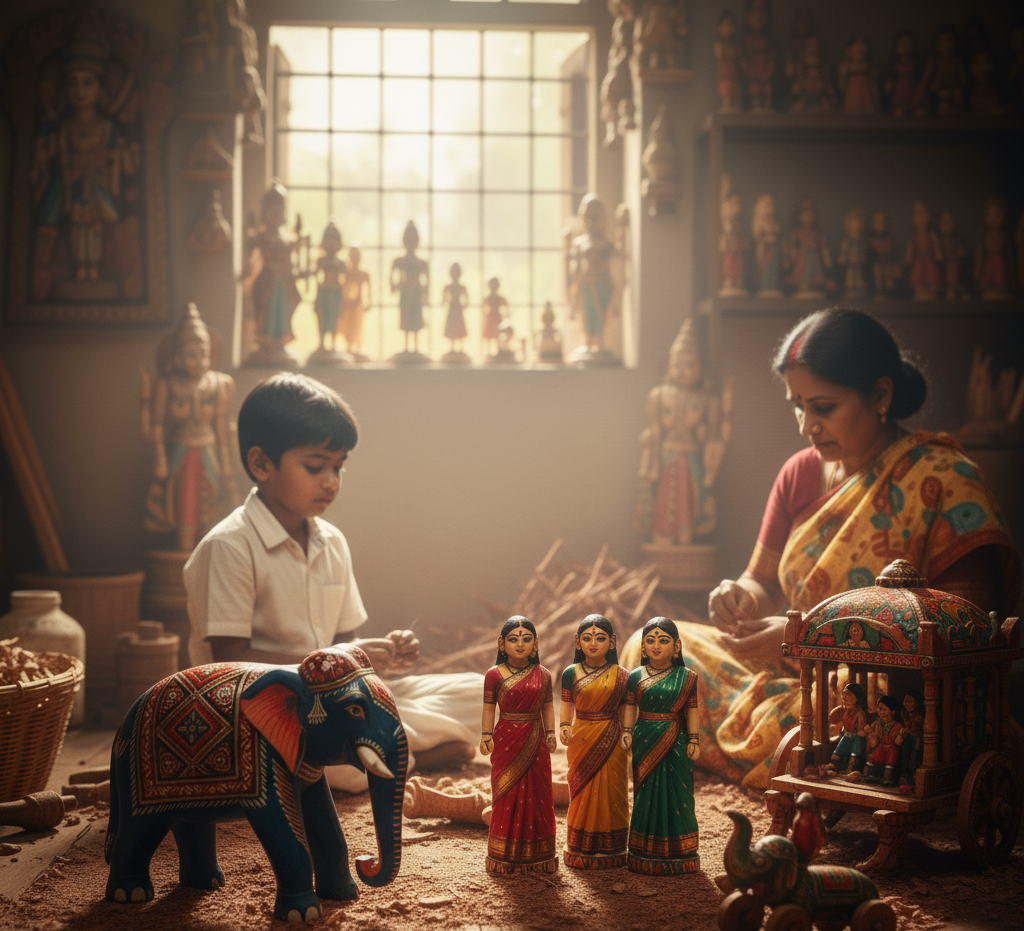
The creation of Kinnal art involves a detailed, multi-step handcrafted process. Artisans begin by selecting softwood, which is ideal for carving and shaping. The wood is cut, carved, and smoothed manually using traditional tools. Once the base structure is ready, natural or synthetic colors are applied carefully by hand.
After painting, the pieces are polished using traditional lacquering techniques to achieve a smooth, shiny finish. This glossy coating not only enhances the visual appeal but also increases durability. The entire process is labor-intensive and requires exceptional skill, patience, and artistic vision, making each Kinnal art piece a true work of craftsmanship.

Unique Features of Kinnal Art
Kinnal art stands apart due to its distinct visual and cultural elements. The use of bright, bold colors such as red, yellow, green, and blue gives the toys their lively appearance. The lacquered finish creates a smooth, glossy surface that is both attractive and long-lasting.
Another unique aspect is the storytelling nature of the designs. Each piece reflects a scene, character, or tradition from rural Karnataka. The eco-friendly nature of the craft—using minimal machinery and mostly hand tools—adds to its sustainable value. Together, these features make Kinnal art easily recognizable and culturally significant.
Popular Kinnal Art Creations
Kinnal artisans produce a wide range of handcrafted items. Traditional wooden dolls representing rural men and women are among the most popular creations. Animal figurines such as horses, elephants, birds, and cows are also commonly crafted. Mythological characters and deity figures are made for religious and decorative purposes.
In addition to toys, artisans create decorative showpieces, home décor items, and educational toys for children. These products combine aesthetic beauty with cultural storytelling, making them suitable for both display and learning.


Why Kinnal Art Matters
Kinnal art plays a crucial role in preserving Karnataka’s folk traditions and supporting rural livelihoods. The craft provides employment to local artisans and helps sustain traditional knowledge that might otherwise disappear. By promoting handmade products, Kinnal art encourages sustainable practices and cultural appreciation.
Supporting Kinnal art also means supporting slow craftsmanship in an era dominated by machine-made products. Each purchase contributes to the survival of a heritage art form and empowers artisan communities.
Challenges & Revival Efforts
Like many traditional crafts, Kinnal art faces challenges such as reduced demand, competition from plastic and factory-made toys, and limited awareness among younger generations. Many artisans struggle with income stability and access to broader markets.
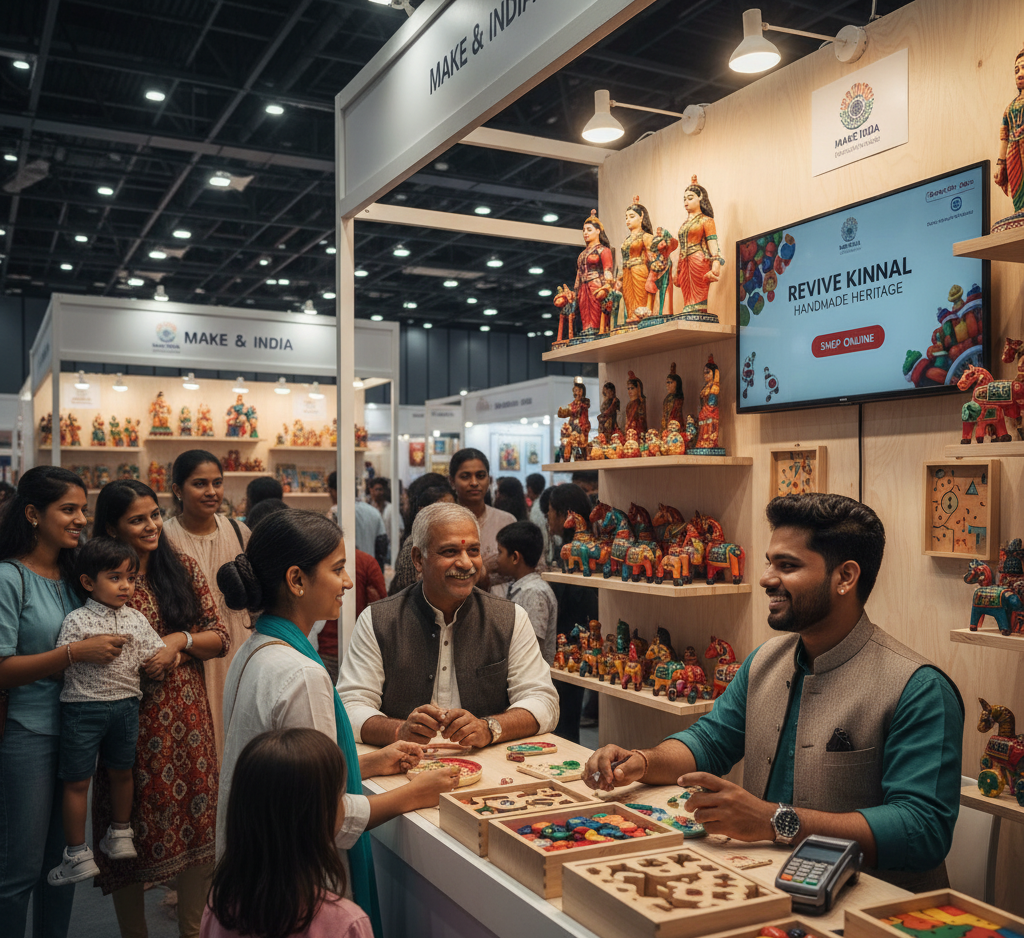
To address this, government initiatives, handicraft exhibitions, cultural festivals, and online platforms are playing a key role in reviving Kinnal art. Training programs and digital promotion are helping artisans reach new audiences and ensure the continuity of this traditional craft.

Explore & Experience Kinnal Art
Exploring Kinnal art is an opportunity to connect with Karnataka’s cultural roots. Whether used as home décor, gifts, or educational toys, Kinnal creations bring stories, colors, and traditions into everyday life. Each piece reflects the artisan’s dedication and the timeless charm of folk craftsmanship.
Experience the beauty of Kinnal art—where tradition meets creativity, and every handcrafted piece tells a story.